
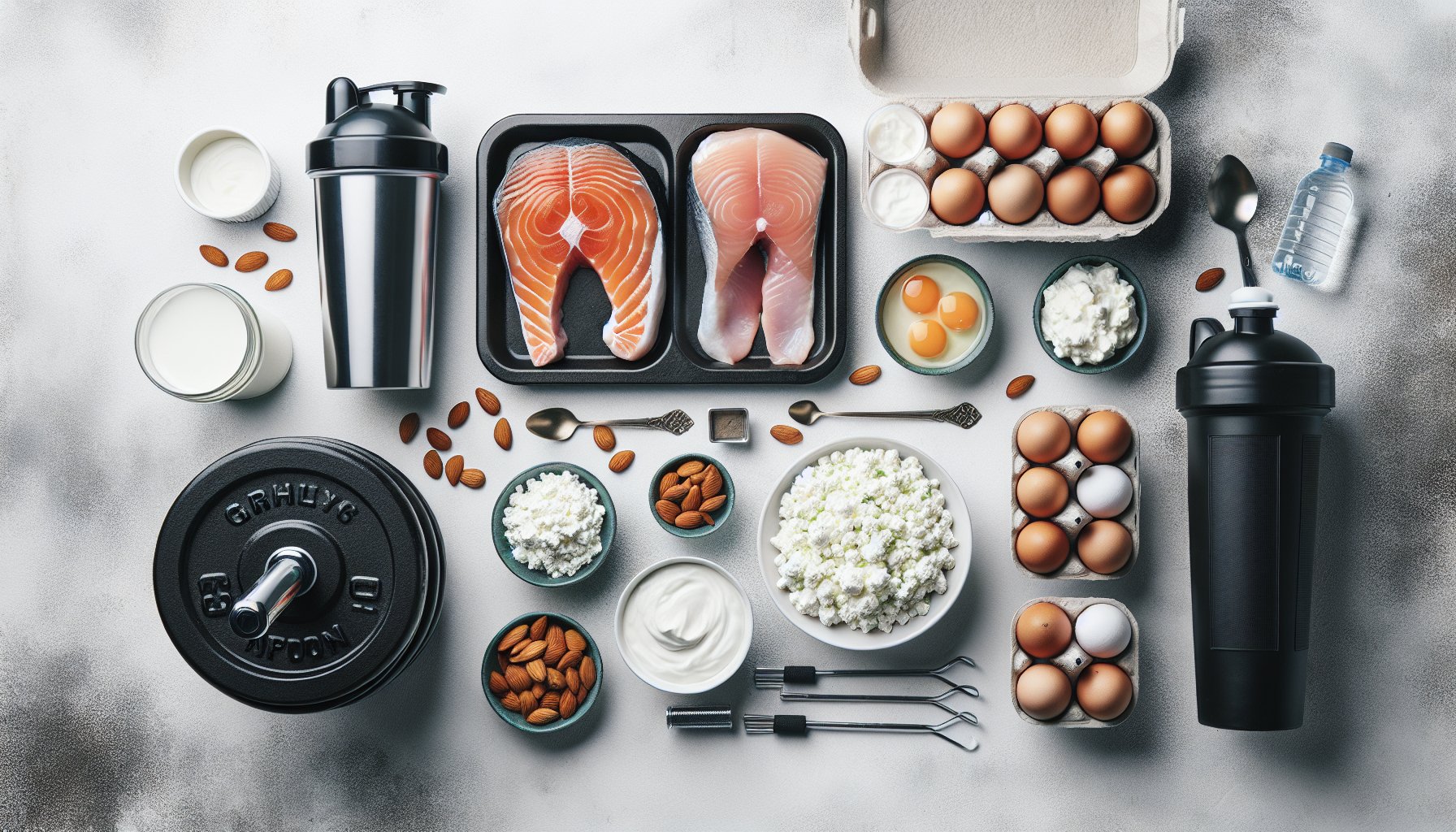
A 2022 meta-analysis in Sports Medicine examined 82 studies and found that protein intakes of 1.6 grams per kilogram of body weight per day maximized muscle protein synthesis in resistance-trained individuals. Yet the average American eats only about 1.0 g/kg daily — enough to survive, but not enough to build or maintain muscle. Here is everything you need to know about getting your protein right.
Quick Summary:
- Aim for 1.6 to 2.2 grams of protein per kilogram of body weight daily if you train regularly
- Spread your intake across 3-5 meals with at least 25-40 grams per sitting
- Prioritize whole food sources like chicken, fish, eggs, and Greek yogurt before supplements
- Protein timing matters less than total daily intake, but post-workout protein still helps
- Higher protein diets protect muscle mass during fat loss and improve body composition
What Protein Does in Your Body
Protein is made up of 20 amino acids, 9 of which are essential because your body cannot produce them. These amino acids build muscle tissue, enzymes, hormones, and immune cells. Every time you eat protein, your body breaks it down and reassembles the amino acids into whatever structures it needs.
For exercisers, the most relevant process is muscle protein synthesis (MPS). Resistance training creates microscopic damage to muscle fibers, and your body repairs that damage using dietary amino acids — making fibers thicker and stronger. Without enough protein, that repair process stalls.
Leucine, a branched-chain amino acid, acts as the primary trigger for MPS. Research in the Journal of Nutrition shows that roughly 2.5 grams of leucine per meal is needed to maximally stimulate the process. This is why protein quality matters, not just total grams.
Protein also drives satiety. A 2015 study in the American Journal of Clinical Nutrition found that higher-protein diets (25-30% of calories) reduced hunger hormones and increased fullness. If you are working toward fat loss, protein is your strongest dietary ally.
How Much Protein You Actually Need
The RDA for protein is 0.8 g/kg of body weight per day — a survival minimum, not an optimization target. Here is what the research says for active people:
General fitness: 1.2-1.4 g/kg/day. The 2017 ISSN position stand established this as the baseline for regular physical activity.
Muscle building: 1.6-2.2 g/kg/day. The Morton et al. (2018) meta-analysis in the British Journal of Sports Medicine pinpointed 1.6 g/kg as the point of diminishing returns, with intakes up to 2.2 g/kg showing smaller additional benefits.
Fat loss while preserving muscle: 2.0-2.4 g/kg/day. A calorie deficit increases muscle breakdown risk. A 2014 JISSN study showed that athletes in a deficit retained significantly more lean mass at higher protein intakes.
Older adults (50+): 1.2-1.6 g/kg/day. Age-related anabolic resistance means older adults need more protein per meal to trigger the same MPS response.
Practical Numbers by Body Weight
| Body Weight | Moderate Activity (1.4 g/kg) | Building Muscle (1.8 g/kg) | Cutting (2.2 g/kg) |
|---|---|---|---|
| 130 lb (59 kg) | 83 g/day | 106 g/day | 130 g/day |
| 155 lb (70 kg) | 98 g/day | 126 g/day | 154 g/day |
| 180 lb (82 kg) | 115 g/day | 148 g/day | 180 g/day |
| 205 lb (93 kg) | 130 g/day | 167 g/day | 205 g/day |
If you are overweight, base your calculations on your goal body weight or lean body mass rather than total weight.
Best Protein Sources Ranked
Protein quality depends on amino acid profile, digestibility, and leucine content. Here are the top sources by category.
Animal Sources (Complete Proteins)
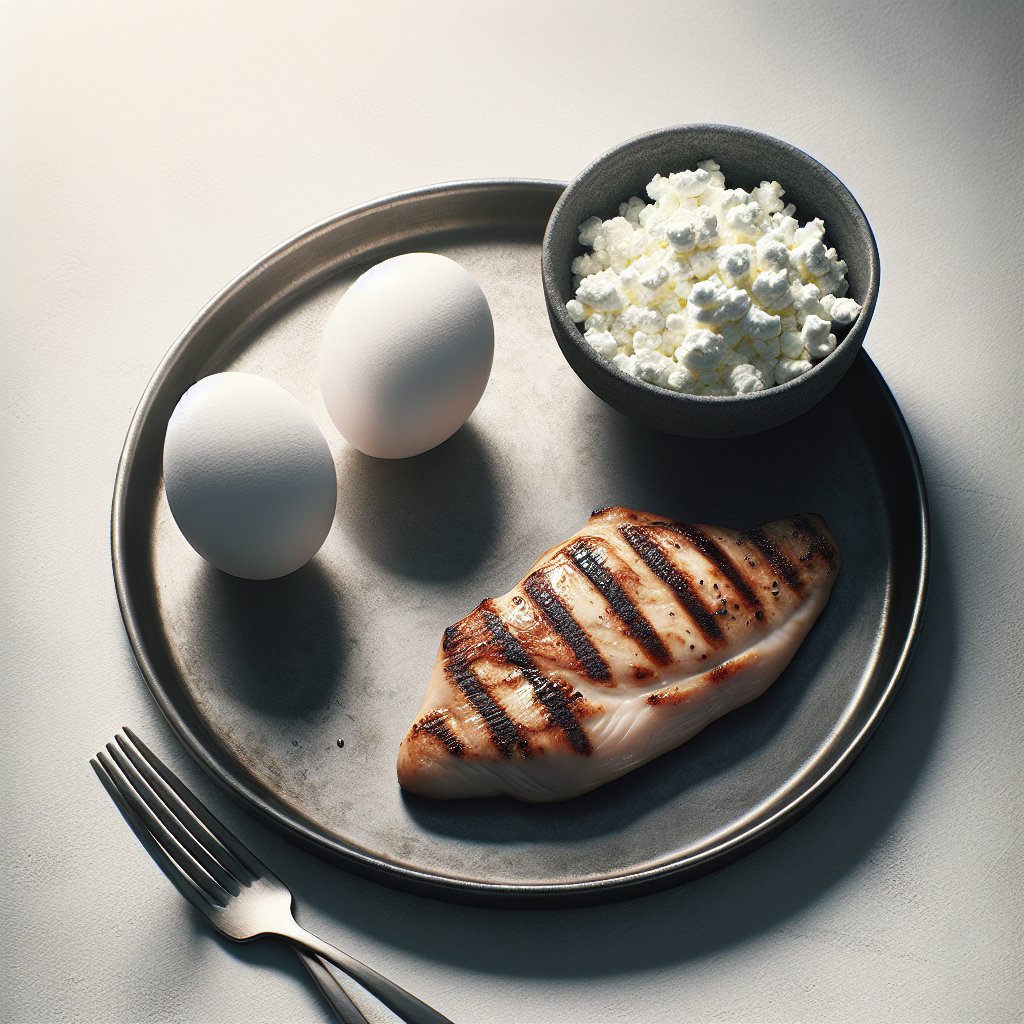
- Chicken breast: 31 g per 100 g, low fat, great for meal prep
- Eggs: 6 g each, excellent bioavailability
- Greek yogurt: 15-20 g per cup, slow-release casein
- Salmon: 25 g per 100 g, plus omega-3 fatty acids
- Lean beef (93%): 26 g per 100 g, high in iron and B12
- Cottage cheese: 14 g per half cup, combines whey and casein
Plant Sources (Combine for Complete Profile)
- Tofu: 17 g per cup, complete amino acid profile
- Lentils: 18 g per cup cooked, high fiber
- Edamame: 18 g per cup, complete protein
- Tempeh: 21 g per cup, fermented for better absorption
Supplements
When whole food does not cover your target, whey protein fills the gap. Whey has the highest leucine content of any protein source at roughly 11% by weight. Optimum Nutrition Gold Standard Whey (around $30 for 2 lbs) is a reliable benchmark. For a plant-based option, Garden of Life Organic Plant Protein (around $35) combines pea, brown rice, and seed proteins. Check our budget protein powder guide for more options, or see our how to use protein powder article for mixing tips.
Verdict: Aim for 1.6-2.2 g/kg of body weight daily from a mix of whole food sources and supplements. Spread your intake across at least 3-4 meals with 25-40 grams per sitting, and prioritize leucine-rich foods like poultry, dairy, and whey protein.
Protein Timing and Distribution
Total daily protein matters more than when you eat it. That said, distribution across meals has a measurable impact.
A 2014 study in the Journal of Nutrition by Mamerow et al. found that spreading protein evenly across three meals (30 g each) stimulated 25% more MPS over 24 hours compared to a skewed pattern (10 g breakfast, 15 g lunch, 65 g dinner).
The "anabolic window" is not the 30-minute emergency that gym culture suggests. A 2013 meta-analysis by Schoenfeld et al. in the Journal of the International Society of Sports Nutrition concluded the post-workout window extends to at least 2 hours, and immediate protein mainly benefits fasted training.
Practical timing guidelines:
- Eat protein within 2 hours after training — do not stress about consuming it immediately
- Include 25-40 g protein at each meal to hit the leucine threshold
- Consider a pre-sleep dose — 40 g of casein before bed improved overnight MPS in a 2012 study in Medicine & Science in Sports & Exercise
For more detail, see our post-workout nutrition guide.
Common Protein Mistakes
Eating too little at breakfast. The average American breakfast has 10-15 g of protein — well below the 25 g needed to trigger MPS. Add eggs, Greek yogurt, or a shake to your morning meal.
Relying on a single source. Chicken breast at every meal gives you protein but limits micronutrient diversity. Rotate between poultry, fish, dairy, eggs, and plant sources.
Thinking more is always better. Above 2.2 g/kg, extra protein shows no measurable muscle-building benefit. If you are counting calories, those excess grams add up.
Ignoring protein quality. A 200-calorie protein bar with 10 g of protein and 25 g of sugar is not an efficient source. Aim for options where protein makes up at least 50% of total calories.
Skipping protein on rest days. Muscle repair happens during recovery, not during the workout. Your protein needs on rest days match training days — keep intake consistent.
If you are focused on building muscle, avoiding these mistakes accelerates your progress.
Frequently Asked Questions
Can you eat too much protein?
For healthy adults with normal kidney function, no. A 2016 study in the Journal of Nutrition and Metabolism followed resistance-trained men consuming up to 3.3 g/kg for a year with no negative kidney markers. If you have pre-existing kidney disease, consult your doctor.
Is plant protein as effective as animal protein for muscle building?
A 2021 meta-analysis in Sports Medicine found no significant difference in muscle growth when total protein and leucine intakes were matched between plant and animal sources. You can build muscle on plant protein — you just need to eat more of it and combine sources for a complete amino acid profile.
Do I need protein shakes to hit my target?
No. Shakes are a convenience tool, not a requirement. They work best when you are short on time or need to fill a gap. Dymatize ISO100 (around $30) and Momentous Essential Whey (around $55) are solid options if you choose to supplement.
Does cooking destroy protein?
Cooking denatures protein but does not reduce amino acid content. In most cases, cooking actually improves digestibility. Grilled chicken provides the same protein as raw chicken.
How much protein can your body absorb in one sitting?
Far more than the often-cited "30 g limit." A 2023 study in Cell Reports Medicine showed that 100 g of protein in a single meal still resulted in continued amino acid absorption over 12 hours. Spreading intake across meals still optimizes MPS, but your body does not waste large protein doses.
Is whey or casein better?
They serve different purposes. Whey digests quickly and spikes amino acid levels within 1-2 hours — ideal around workouts. Casein digests slowly over 6-8 hours, making it better before bed. Both are effective for total daily protein. Many dairy products like Greek yogurt naturally contain both.
Should I track protein if I am just trying to lose weight?
Yes. Protein preserves muscle in a calorie deficit, has the highest thermic effect of food (20-30% of protein calories burned during digestion), and keeps you fuller longer. Tracking protein is more impactful than tracking total calories alone.
What about collagen protein supplements?
Collagen lacks tryptophan and is low in leucine, making it a poor choice for muscle building. It may benefit joints and skin, but do not count collagen supplements toward your MPS-driving protein target.
Does protein intake change as you age?
Yes. Adults over 50 experience anabolic resistance, meaning muscles respond less efficiently to the same protein dose. Eat 35-40 g per meal and ensure adequate leucine. The PROT-AGE study group recommends 1.2-1.5 g/kg for healthy older adults and up to 2.0 g/kg for those who exercise.
Can high protein intake cause kidney stones?
A 2020 review in Advances in Nutrition concluded that protein up to 2.0 g/kg does not increase kidney stone risk in healthy adults who stay well hydrated. Adequate water intake and a diet rich in fruits and vegetables offsets any theoretical increase in calcium excretion.
How do I get enough protein on a budget?
Eggs, canned tuna, chicken thighs, cottage cheese, and lentils are the most cost-effective sources. At $0.10-0.15 per gram of protein, eggs and canned tuna beat almost every supplement. Add Thorne Whey Protein (around $50 for 30 servings) when whole food is not practical.
The Bottom Line
Your protein target depends on your goals: 1.2-1.4 g/kg for general fitness, 1.6-2.2 g/kg for muscle building, and up to 2.4 g/kg during aggressive fat loss. Spread your intake across 3-5 meals, hit at least 25 g per sitting, and prioritize whole food sources first. Get the total right, stay consistent, and the results follow.
Sources:
- Morton RW, et al. A systematic review, meta-analysis and meta-regression of the effect of protein supplementation on resistance training-induced gains in muscle mass and strength in healthy adults. British Journal of Sports Medicine. 2018;52(6):376-384. https://bjsm.bmj.com/content/52/6/376
- Jager R, et al. International Society of Sports Nutrition Position Stand: protein and exercise. Journal of the International Society of Sports Nutrition. 2017;14:20. https://jissn.biomedcentral.com/articles/10.1186/s12970-017-0177-8
- Mamerow MM, et al. Dietary protein distribution positively influences 24-h muscle protein synthesis in healthy adults. Journal of Nutrition. 2014;144(6):876-880. https://academic.oup.com/jn/article/144/6/876/4589943
- Schoenfeld BJ, et al. The effect of protein timing on muscle strength and hypertrophy: a meta-analysis. Journal of the International Society of Sports Nutrition. 2013;10:53. https://jissn.biomedcentral.com/articles/10.1186/1550-2783-10-53
- Res PT, et al. Protein ingestion before sleep improves postexercise overnight recovery. Medicine & Science in Sports & Exercise. 2012;44(8):1560-1569. https://pubmed.ncbi.nlm.nih.gov/22330017/
- Trommelen J, et al. The anabolic response to protein ingestion during recovery from exercise has no upper limit in magnitude and duration in vivo in humans. Cell Reports Medicine. 2023;4(12):101324. https://pubmed.ncbi.nlm.nih.gov/38118407/
- Antonio J, et al. A high protein diet has no harmful effects: a one-year crossover study in resistance-trained males. Journal of Nutrition and Metabolism. 2016;2016:9104792. https://pubmed.ncbi.nlm.nih.gov/27807480/